


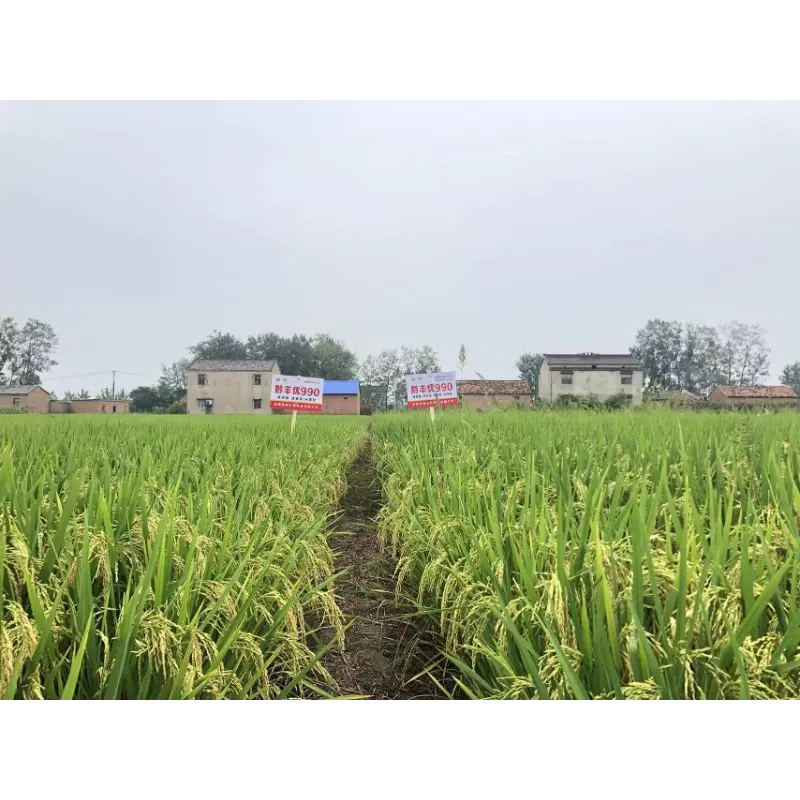
Introduction
The whole world is full of prosperity
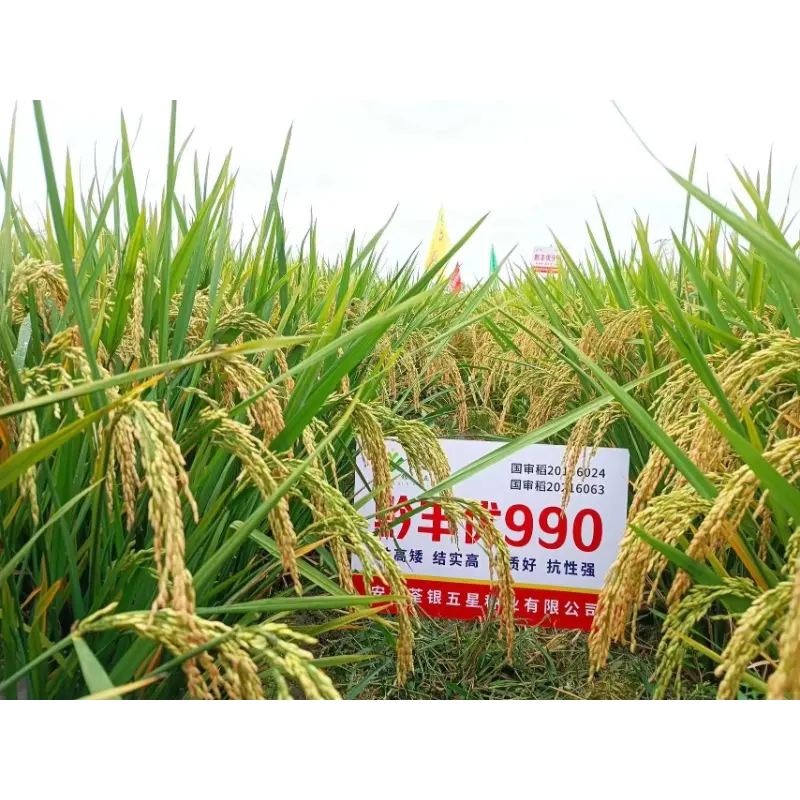
A three-line hybrid rice variety with double national approval.
It is planted as a season of medium-season rice in the upper reaches of the Yangtze River, with a full growth period of 151.8 days, 1.2 days longer than the control.
It is planted as a season of medium-season rice in the middle and lower reaches of the Yangtze River, with a full growth period of 133-135 days, suitable growth period, and good adaptability.
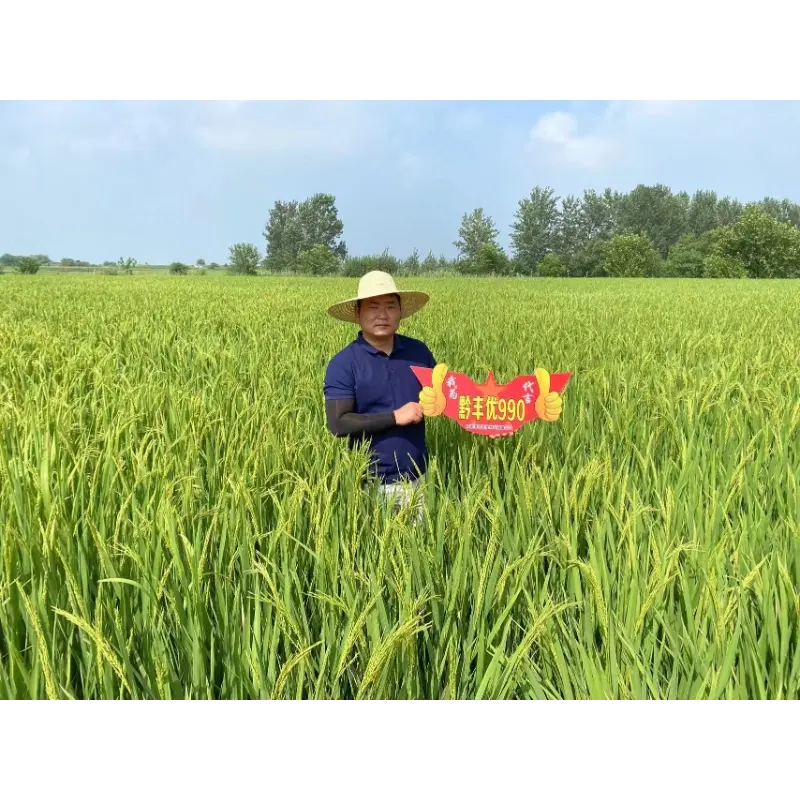
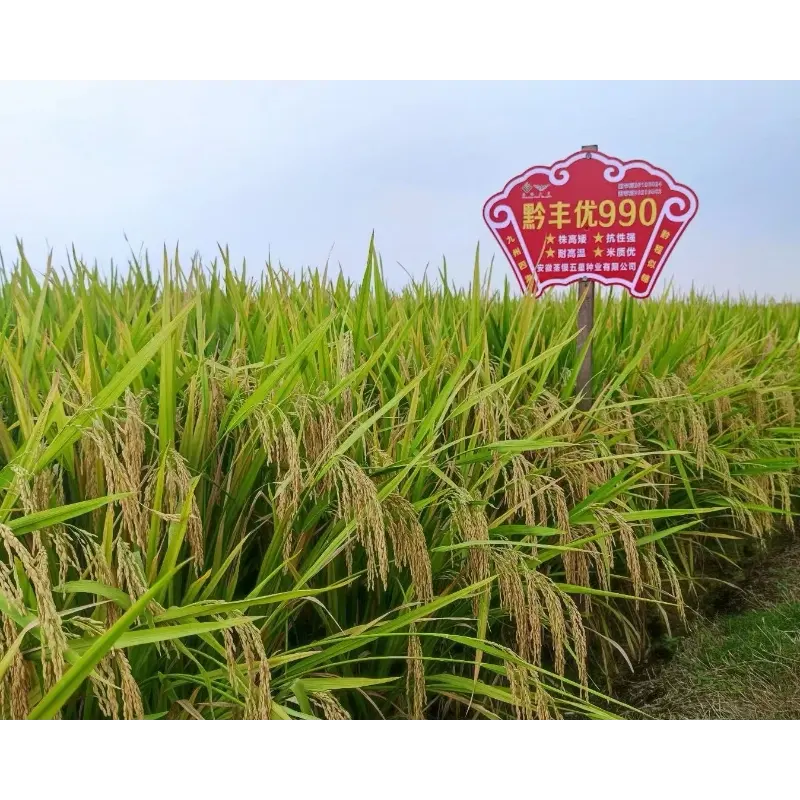
Short plant height: 115-117cm, sturdy stems, well-developed root system, and strong lodging resistance.
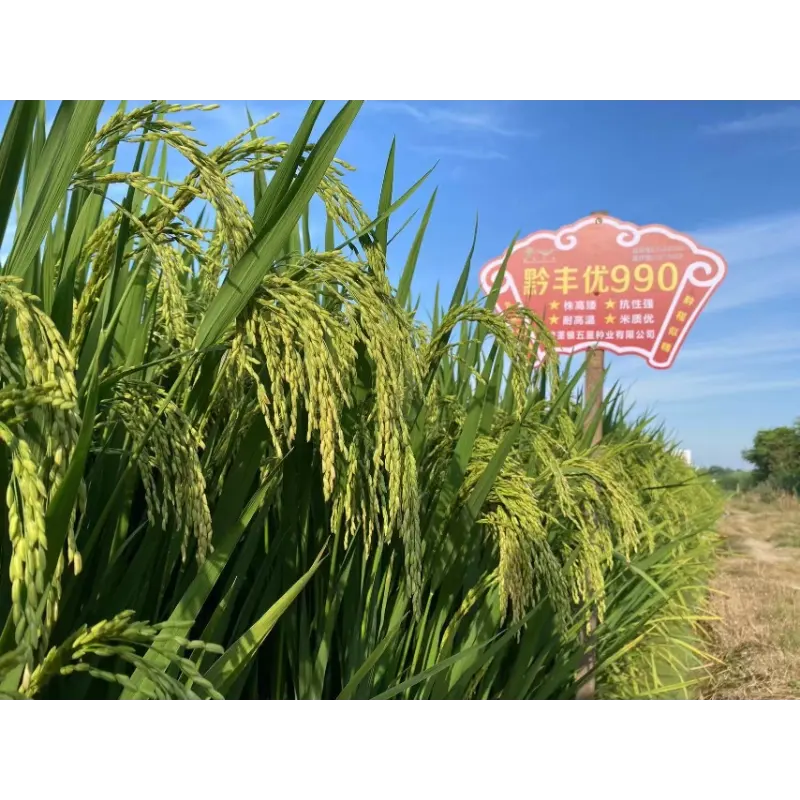
High yield: ear length 26-28cm, average ear number 220 grains, large ear can reach about 550 grains, fruit setting rate 85.6%, dry grain weight 26.5 grams, and good high-yield structure.
Strong resistance: Under the extreme climate conditions in 2022 and 2023, it showed outstanding advantages of high fruit setting in the early stage under high temperature and no premature aging in the later stage under low temperature; strong resistance to red leaf disease.
The rice quality is excellent: the whole polished rice rate is 64.2%, the chalkiness is 2.1%, the length-to-width ratio is 3.5, and the rice quality meets the national standard level 2.
Characteristics
Indica three-line hybrid rice variety. When planting mid-season rice in the upper reaches of the Yangtze River, the total growth period is 151.8 days, which is 1.2 days longer than the control F You 498. The plant height is 117.7 cm, the ear length is 25.9 cm, the effective number of ears per mu is 134,000, the total number of grains per ear is 221.2, the seed setting rate is 84%, and the thousand-grain weight is 27.7 grams. Resistance: The comprehensive index of rice blast disease was 3.9 and 6.7 respectively in the two years, the highest level of panicle blast loss rate was level 7, brown planthopper level 9, heat resistance at heading stage 5, cold tolerance level 3; susceptible to rice blast, high susceptibility to brown planthopper, heading The heat resistance is average and the cold resistance is strong. Main indicators of rice quality: polished rice rate 54.5%, chalky grain rate 8.0%, chalkiness 3.0%, amylose content 14.7%, gum consistency 72 mm, aspect ratio 3.7, reaching the “Quality of Edible Rice Varieties” in the agricultural industry Standard level two.
Production performance
In 2016, it participated in the regional trial of the late-maturing group of medium-season indica rice in the upper reaches of the Yangtze River, with an average yield of 647.66 kg per mu, a 3.19% increase over the control FYou498; in 2017, the trial continued, with an average yield of 611.89 kg per mu, a 4.03% increase over the control FYou498; the average yield of the two-year regional trial was 629.78 kg per mu, a 3.61% increase over the control FYou498; in the production trial in 2018, the average yield was 620.02 kg per mu, a 6.16% increase over the control FYou498.
Key points of cultivation technology
Cultivate strong seedlings with more tillers. Plant one season of medium-season rice in the upper reaches of the Yangtze River. According to local ecological conditions, sow early and timely, with a seed rate of 1.0-1.2 kg per mu in the field and 7-8 kg per mu in the nursery field. Adhere to soaking seeds with strong chlorine, sow sparsely and evenly, strengthen fertilizer and water management during the seedling period, and prevent and control rice planthoppers. 2. Plant early and timely to promote tillering. Transplant seedlings at the 6-leaf stage of water-raised seedlings, and the seedlings are 30-35 days old; transplant seedlings at the 3.5-4 leaf stage of dry-raised seedlings, and the seedlings are 18-22 days old. Reasonable dense planting is required, with a row spacing of 20 cm × 30 cm, 3 grain seedlings in each hole, and 70,000-90,000 basic seedlings per mu. 3. Moderate fertilizer and water management, control nitrogen and increase phosphorus and potassium. Heavy application of base fertilizer: 25-30 kg of high-concentration compound fertilizer or 35-40 kg of ordinary compound fertilizer per mu; early application of tillering fertilizer: 5-7 kg of urea per mu 5-7 days after planting, and 8-10 kg of potassium chloride per mu 20-22 days after planting. Potassium fertilizer for ear and grain: 12-15 kg of potassium chloride per mu in the middle of ear formation promotes large ears, multiple grains and strong seeds, and strictly controls the application of nitrogen fertilizer in the middle and late stages. 4. Scientific management of water to prevent diseases and pests. Inch water returns to green, shallow water and moist tillering, enough seedlings to dry the field, keep shallow water during the ear formation and heading period, alternate dry and wet filling, and drain 6-8 days before harvesting. 5. Timely prevention and control of diseases and pests. According to the forecast of diseases and pests, timely application of pesticides to prevent and control diseases and pests such as borers, rice planthoppers, sheath blight, rice false smut, and rice blast.
Review opinion
This variety meets the national rice variety approval standards and has passed the approval. It is suitable for planting as a medium-season rice in the Pingba hilly rice area of Sichuan Province, Guizhou Province (except Wuling Mountain Area), medium and low altitude indica rice areas of Yunnan Province, areas below 800 meters above sea level in Chongqing City (except Wuling Mountain Area), and rice blast-slightly affected areas in the southern rice-growing areas of Shaanxi Province. It is not suitable for planting in areas with severe rice blast.


